
Surfaces That Handle Heavy Loads Daily
Concrete, Pavers & Driveways in the Greater Tidewater VA area for properties with cracked surfaces, uneven settling, or drainage problems
A properly installed driveway supports vehicle weight without cracking and sheds water away from the foundation instead of pooling near the house. Driveways in Portsmouth experience cracking when the base material wasn't compacted correctly or when tree roots lift sections over time, and uneven settling creates low spots where water collects and accelerates deterioration. Steven Rosso Company handles concrete installation, paver installation, and custom concrete projects including sidewalks and walkways that remain level and functional through years of use.
Concrete installation requires excavation to stable subgrade, a compacted gravel base that drains water away from the slab, and reinforcement to control cracking as the concrete cures. Driveway thickness depends on whether the surface will support passenger vehicles or heavier trucks, and control joints are cut at intervals to direct cracking into planned locations rather than random patterns. Paver installation involves edge restraints to prevent spreading and sand bedding that allows individual units to shift slightly without the entire surface failing.
Request a site visit to assess base conditions and discuss surface options for your driveway or walkway project.
What Changes After Concrete Work Completes
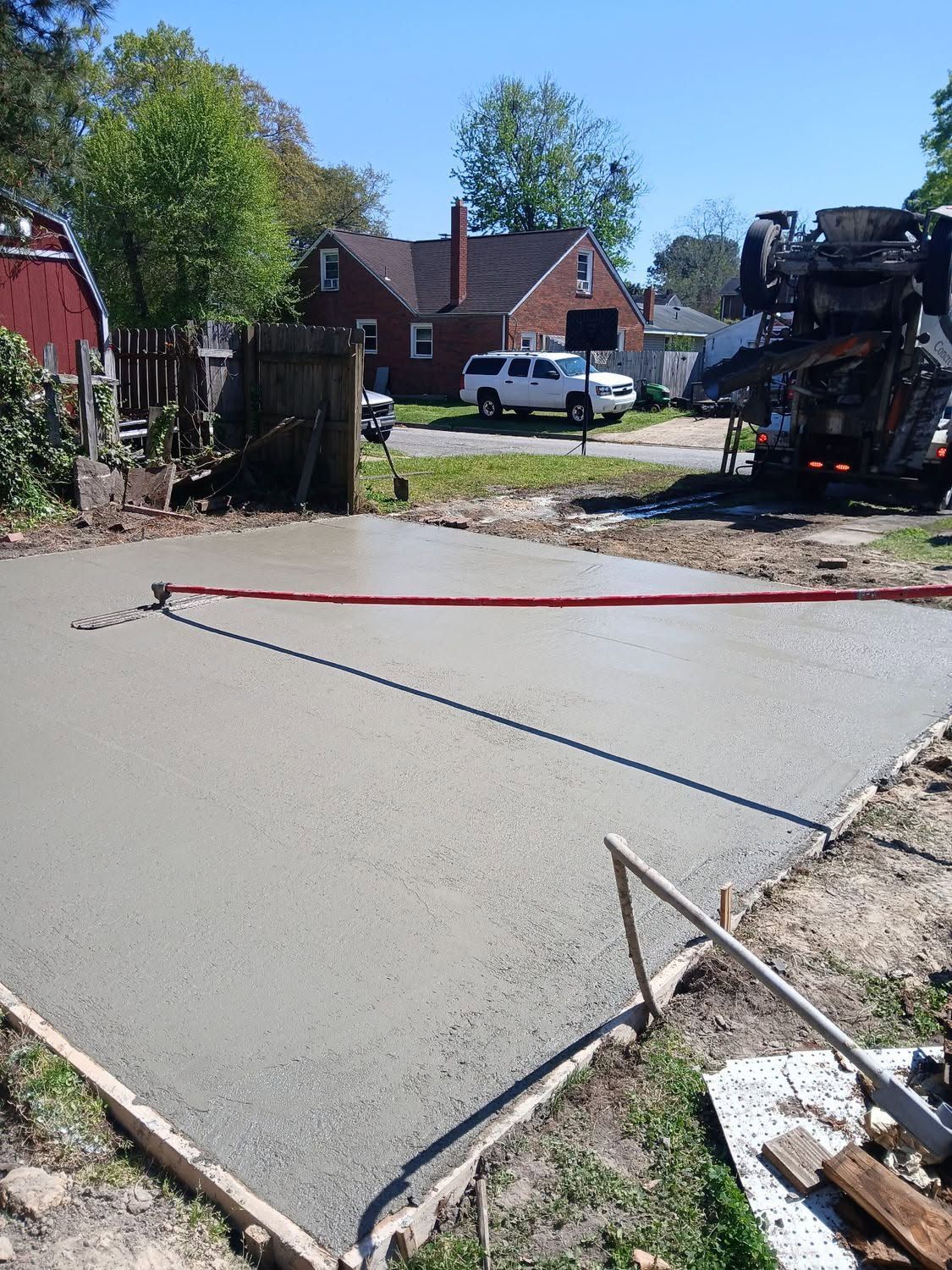
New concrete driveways appear smooth and level, with a consistent slope that directs water toward the street or drainage areas rather than against the garage or foundation. Sidewalks and walkways no longer have lips or uneven sections that create tripping hazards, and paver installations look uniform with tight joints that don't allow weed growth or sand loss. Proper grading around concrete surfaces means water moves away from the house instead of pooling near the foundation, which prevents basement moisture and soil erosion.
After installation, you notice that vehicles no longer scrape on uneven transitions, and water drains off the driveway quickly after rain instead of sitting in low spots. Walkways remain stable without rocking or shifting underfoot, and custom concrete projects like patios or equipment pads stay level without settling. Correctly installed concrete requires minimal maintenance beyond occasional cleaning and doesn't need resurfacing for decades if the base preparation was done right.
Custom concrete projects include decorative finishes like stamping or color integration, but those options don't affect structural performance—they're applied after the functional work of base prep and reinforcement is complete. Paver installations offer easier repair than monolithic concrete because individual units can be lifted and reset if underground utility work requires access later. Concrete work often requires coordination with downspout relocation or drainage system installation to manage water properly.
Answers to Frequent Concrete Questions
Property owners planning concrete or paver work typically ask about preparation steps and longevity before projects begin.
What causes concrete driveways to crack prematurely?
Inadequate base compaction, insufficient slab thickness for the load, or missing control joints cause cracking, along with tree roots that lift sections as they grow beneath the surface.
How deep does the base need to be for a driveway?
Base depth depends on soil conditions, but most driveways in this area require four to six inches of compacted gravel beneath the concrete to provide stable support and drainage.
When is paver installation better than poured concrete?
Pavers allow easier access for future utility repairs and offer more design flexibility, though they require edge restraints and periodic joint sand replenishment to stay tight.
What's included in a sidewalk installation?
Work includes excavation, base material placement and compaction, forming, concrete pouring, finishing, and cutting control joints to manage cracking as the slab cures.
How long before new concrete can support vehicle weight?
Concrete reaches sufficient strength for light vehicle traffic in about seven days, though full curing continues for weeks and heavy loads should wait longer.
Steven Rosso Company evaluates site conditions and recommends concrete or paver solutions based on soil stability, drainage requirements, and how you'll use the surface. Call (757) 403-4680 to discuss your project and schedule a property assessment.